
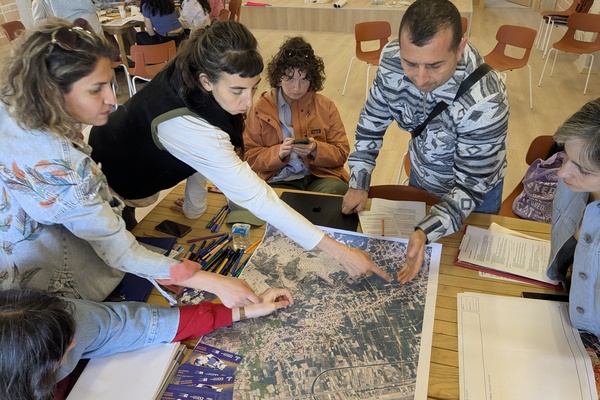
In April 2026, a one-week community-led planning workshop was held in Mağaracık, Samandağ, near Antakya in southern Türkiye, bringing together residents, municipal actors, and international practitioners to explore approaches to post-earthquake reconstruction rooted in local knowledge and participation. The workshop was organised by Architecture Sans Frontières UK in collaboration with Hatay Deprem Dayanışması (Earthquake Solidarity) and Samandağ Municipality, as part of ASF-International’s Challenging Practice programme.
Supported by the Istanbul Policy Centre, the Centre for Spatial Justice, Urban.koop, the University of Sheffield, and University College London, the workshop brought together architects, planners, sociologists, and researchers from Türkiye and internationally to work in close collaboration with residents of Samandağ. Rather than treating reconstruction as a purely technical or logistical challenge, the programme critically examined how state-led recovery has reproduced longstanding inequalities—delivering standardised housing provision while accelerating environmental degradation and undermining local livelihoods, cultural practices, and relationships to land. At the same time, the workshop sought to identify and open up spaces for dialogue and co-production, as a way to move beyond often confrontational relationships between state-led planning processes and local communities.
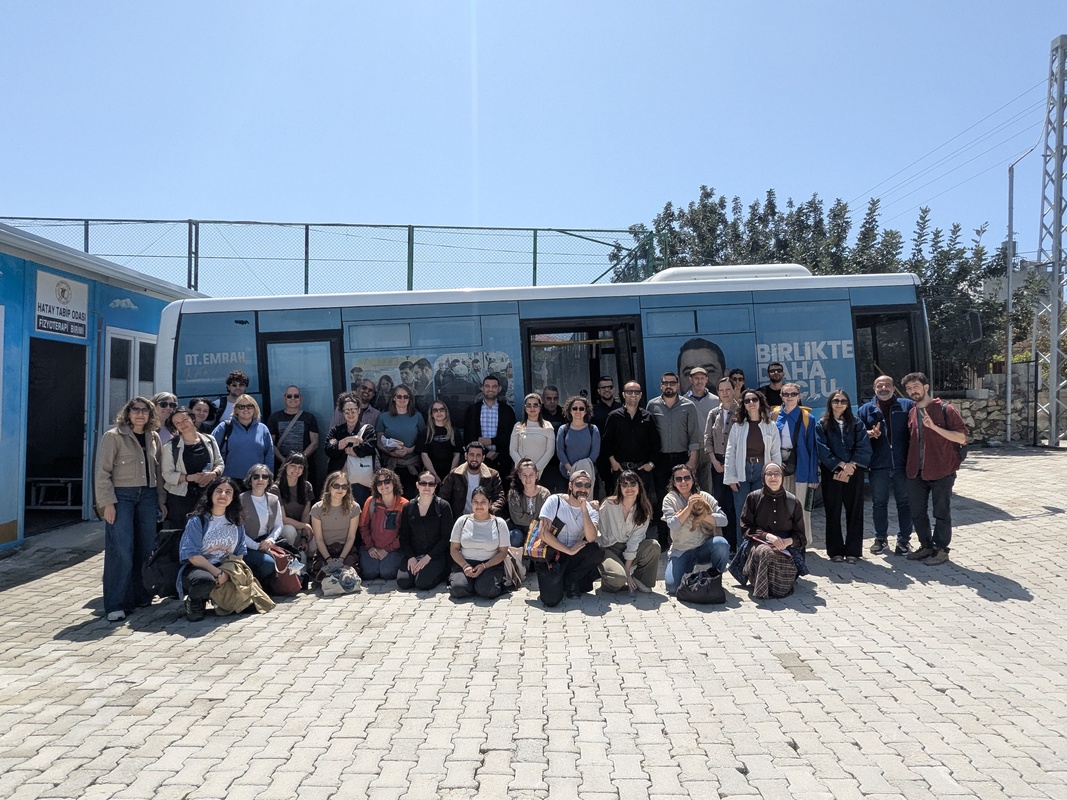
Through fieldwork in Mağaracık, the team engaged with residents, municipal planners, civil society organisations, and public institutions to understand how reconstruction policies are reshaping everyday life. Particular attention was given not only to the tensions between centrally driven housing schemes and situated local knowledge, but also to the possibilities for more constructive forms of engagement between institutions and communities. Many residents articulated concerns that reconstruction processes, in their current form, risk erasing both living heritage and the socio-spatial conditions that sustain it, while also expressing a desire for more inclusive and dialogic planning processes.
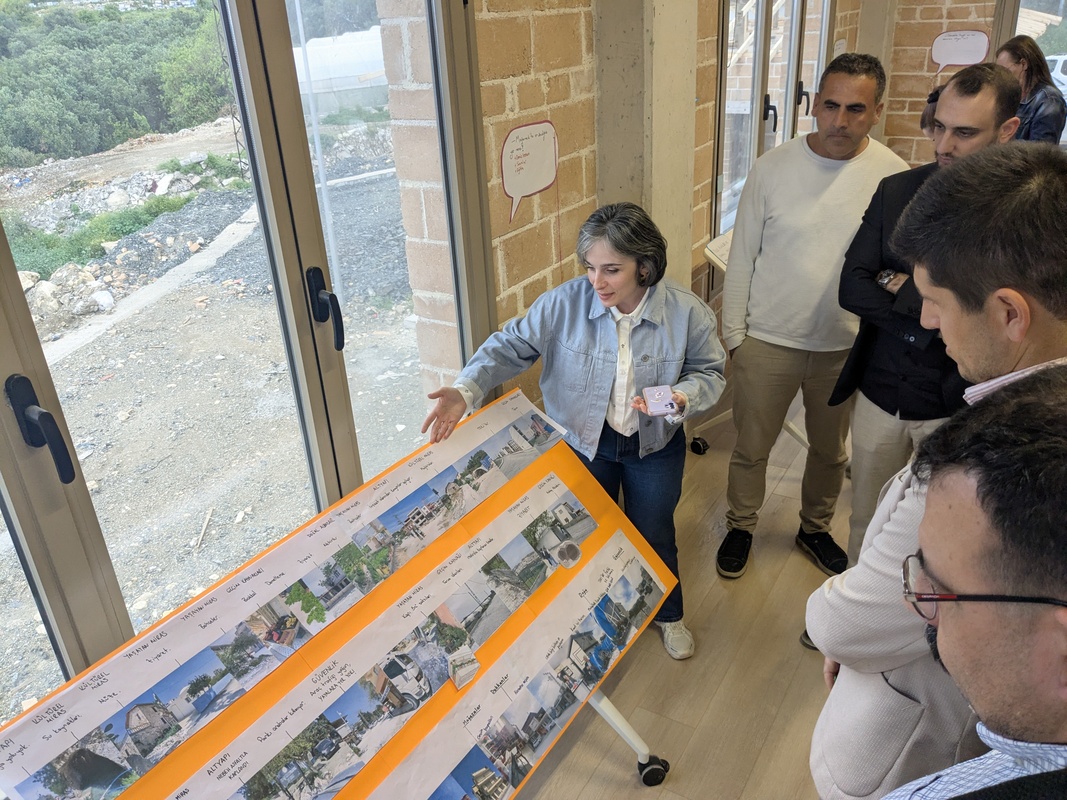
The workshop culminated in a public exhibition and discussion at the newly built Mağaracık Community Centre, creating a space for dialogue between residents, municipal actors, and civil society. These exchanges highlighted both the challenges and the potential of moving beyond top-down recovery frameworks towards approaches that recognise community agency, address historical injustices, and engage meaningfully with environmental limits.
Next steps include the development of a documentary and a written report, to be launched in summer. These outputs aim not only to document the process but to support ongoing advocacy by local groups and the municipality—strengthening calls for reconstruction models that are locally led, environmentally responsive, and grounded in the rights, knowledge, and futures of historically marginalised communities.
Challenging Practice: Essential for the Social Production of Habitat is an independent learning programme that supports built environment professionals to engage with inclusive and sustainable urban development.
In the second stage of the course, participants learn through action in contexts where issues of inequality and vulnerability are at stake. This may involve workshops or immersive placements. The goal is to provide hands-on experience that deepens participants’ understanding of critical and participatory approaches to the built environment, while developing practical skills in collaborative design and planning.

