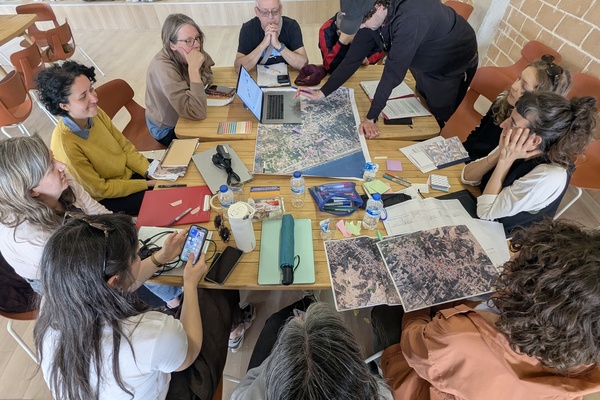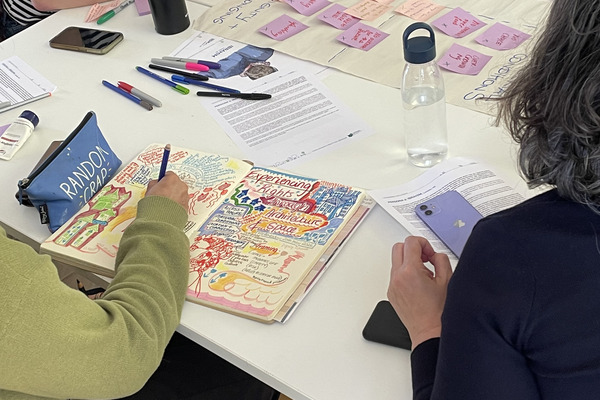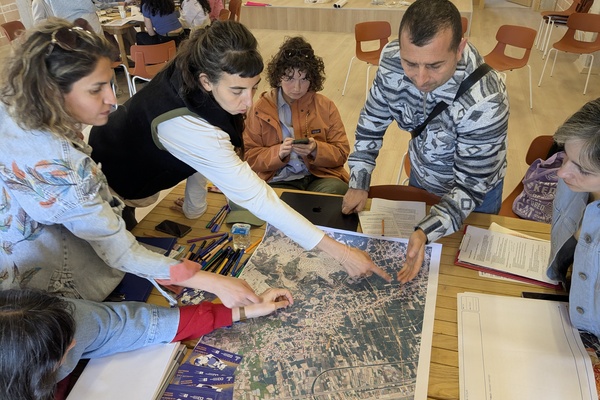
We are happy to share Repairing Living Heritage in Samandağ: Community-Led Planning for Long-Term Recovery, a new report documenting the findings of a week-long community-led planning workshop held in Mağaracık, Samandağ, in April 2026.
The workshop was co-organised by Architecture Sans Frontières UK (ASF-UK), Hatay Deprem Dayanışma Derneği (Hatay Earthquake Solidarity) and Samandağ Municipality, with the collaboration of the Istanbul Policy Centre, Mekanda Adalet Derneği (Centre for Spatial Justice), Urban.koop, the University of Sheffield, and University College London. The production of this publication was supported financially by Sivil Düşün.
More than three years after the February 2023 earthquakes, Samandağ continues to face profound transformations. Alongside mass displacement and the pressures of a centrally coordinated reconstruction process, large-scale housing developments are transforming the surrounding landscape. In the areas around Mağaracık, construction on former agricultural land has affected local livelihoods and ecosystems, while residents are concerned about the longer-term consequences for the neighbourhood’s social and cultural fabric.
Against this backdrop, the workshop brought together residents, municipal representatives, civil society organisations and international practitioners to examine these changes and collectively imagine possible futures for Mağaracık. Working across the scales of dwelling, community and city, participants explored what is at stake in the ongoing reconstruction and articulated shared aspirations for the future. The process was grounded in the conviction that, although many decisions have already been taken and implemented, some of which are irreversible, recovery is far from over and there is still room to shape what comes next.
About the report and key messages
The report brings together the workshop’s findings, documenting how the earthquake and subsequent reconstruction are reshaping homes, neighbourhood life, livelihoods and the wider landscape. Through household interviews, neighbourhood walks, participatory mapping, collective visioning activities and interviews with representatives of public institutions and civil society organisations, it explores how Samandağ’s living heritage—the network of relationships between people, practices and places that gives meaning to place and holds communities together—can be recognised and protected, and inform more inclusive and locally grounded approaches to long-term recovery.
The report highlights the need to move beyond housing delivery and recognise recovery as a longer-term process. Repairing Samandağ’s living heritage requires meaningful participation, stronger collaboration between communities and institutions, and planning that responds to residents’ everyday needs, knowledge and aspirations. It also identifies practical opportunities for local authorities, civil society and practitioners to work together to shape a more socially and environmentally just future.
Next steps: Living Heritage in Samandağ 2027
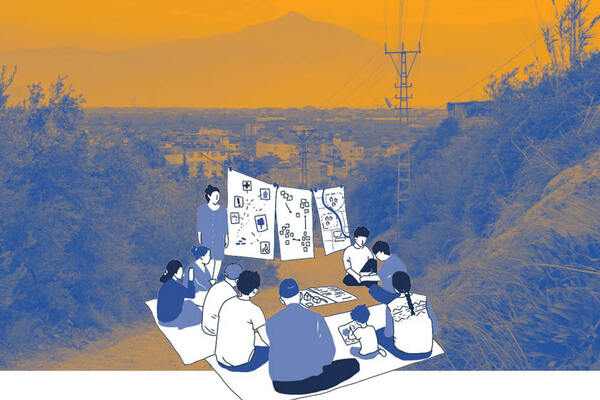
This work will feed into a follow-up workshop, Living Heritage in Samandağ 2027, to be held in Mağaracık in April 2027. The workshop will focus on the participatory design of public spaces within the neighbourhood, involving residents of Mağaracık and nearby new housing developments.
The aim is to explore how residents’ knowledge, experiences and aspirations can inform the design of public spaces that support their own ways of life, social practices and forms of knowledge, while enabling the expression and transmission of their cultural identities.