Home-making as Repair in Post-disaster Temporary Housing
DPU/ASF-UK Fellow Mahiro Sekizaki explores home-making in Antakya's temporary shelters as everyday repair and resistance

By Mahiro Sekizaki
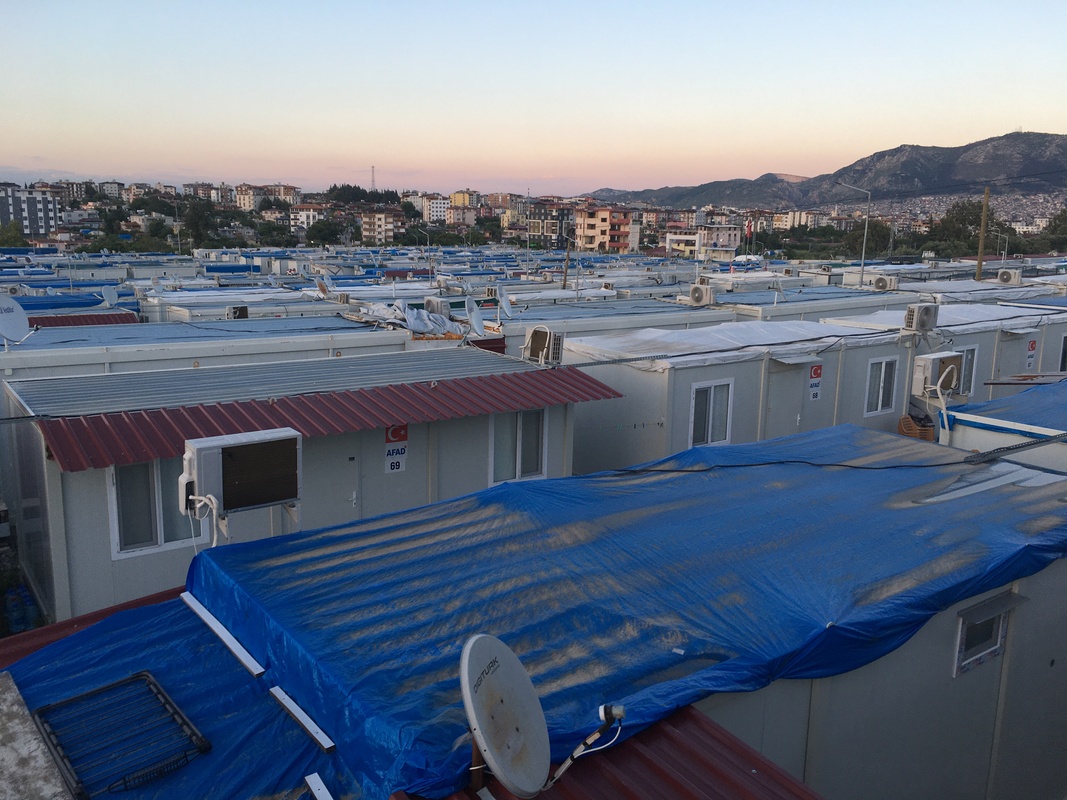
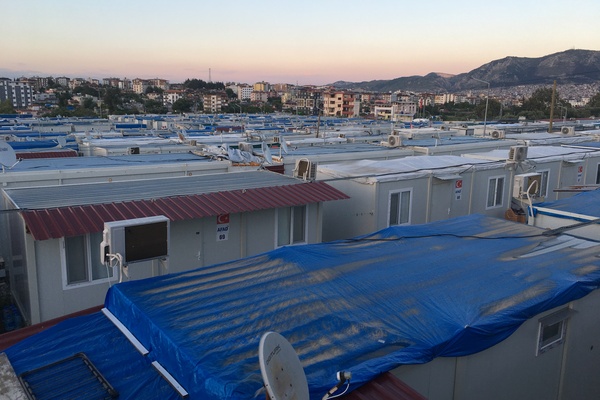
Tayfur Sökmen container city in Çekmece, Defne district (Hatay). (Credits: Francesco Pasta)
In planning and academic discourse, post-disaster temporary housing is often framed as merely a waiting space to be endured, where permanence is to be reduced to a minimum. This framing can legitimise rapid, top-down reconstruction as recovery. The peripheral location of temporary housing may reflect this framing, leaving the city centre largely available for reconstruction. Research by ASF-UK on the Dom community in post-disaster Antakya, Hatay, Türkiye reveals how authorities displaced this minority community by providing temporary housing in places culturally and physically distant from their former neighbourhoods, with limited access to the services and jobs they relied on (Figure 1). Yet, after several years of inhabiting these “temporary” spaces, residents have re-established the social and material connections disrupted by the earthquake through everyday life, making these spaces into homes – albeit transitory ones.
In my dissertation, I developed the concept of home-making as repair, drawing on interviews with members of the ASF-UK community who conducted participatory action research in container housing in Hatay. Home-making as repair involves rebuilding the material and social connections disrupted by the earthquake, which are often left unrepaired because reconstruction policies focus mainly on material rebuilding. The concept also highlights the limitations of conventional disaster housing phases, which assume a linear transition from temporary to permanent housing. This assumption can cause a second loss of home by forcing residents to lose the material and social connections they have rebuilt.
This post argues that temporary housing holds value in recovery as a space where residents rebuild their ties through home-making as repair. This repair is an everyday practice of resisting the politically framed temporality of waiting.
My research used discourse analysis to examine how official statements sustain this hope. After the 2023 Türkiye–Syria earthquake, officials repeatedly promised and showed progress in the rapid, large-scale provision of temporary and permanent housing. Slogans such as “Solidarity of the Century” (Asrın Dayanışması) called for solidarity among those awaiting reconstruction, sustaining hope by projecting an image of collective belief in reconstruction.
Conventional disaster housing phases leave residents of temporary housing with two possible paths.Among those who hold on to this hope, the longer they wait, the more value they place on reconstruction. Yet they may lose their cultural and social communities when authorities eventually provide permanent housing. Those who do not share this hope may invest their time and effort in temporary housing, yet they too face a second loss of home when they move out or, if they stay, remain cut off from public services and job opportunities due to the distant location of temporary housing. Either way, following the dominant housing phases leaves residents experiencing a loss of their sense of belonging.
In Hatay, residents visibly invest in their temporary housing. As shown in Figure 2, residents build extensions using materials such as wood and steel, to create space for gardening, storage, and drying clothes. Megha Paudyal from ASF-UK also observed such self-built spaces and gardening activities, including the use of plants obtained from new neighbours or brought from their former homes. These gardening activities foster connections with neighbours and plants, helping residents make a home by reactivating their everyday cultural routines and incorporating objects connected to their memories. These examples show how homemaking happens through small investments, adaptations, and everyday acts in the present, in the present, which does not imply any claim to long-term permanence on site.
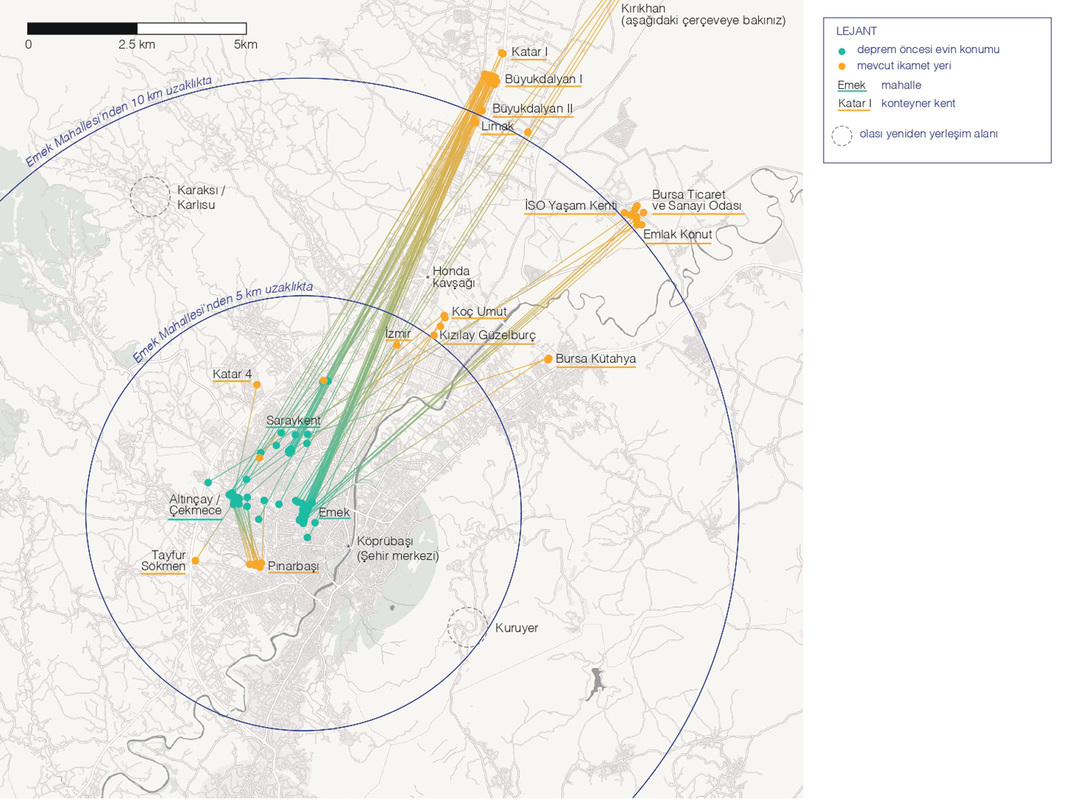
Figure 1. Post-earthquake displacement of Dom's households from Antakya's inner-city neighbourhoods to outer container cities. Adapted from Architecture Sans Frontières UK and Sivil Düşler (2025, p. 33)
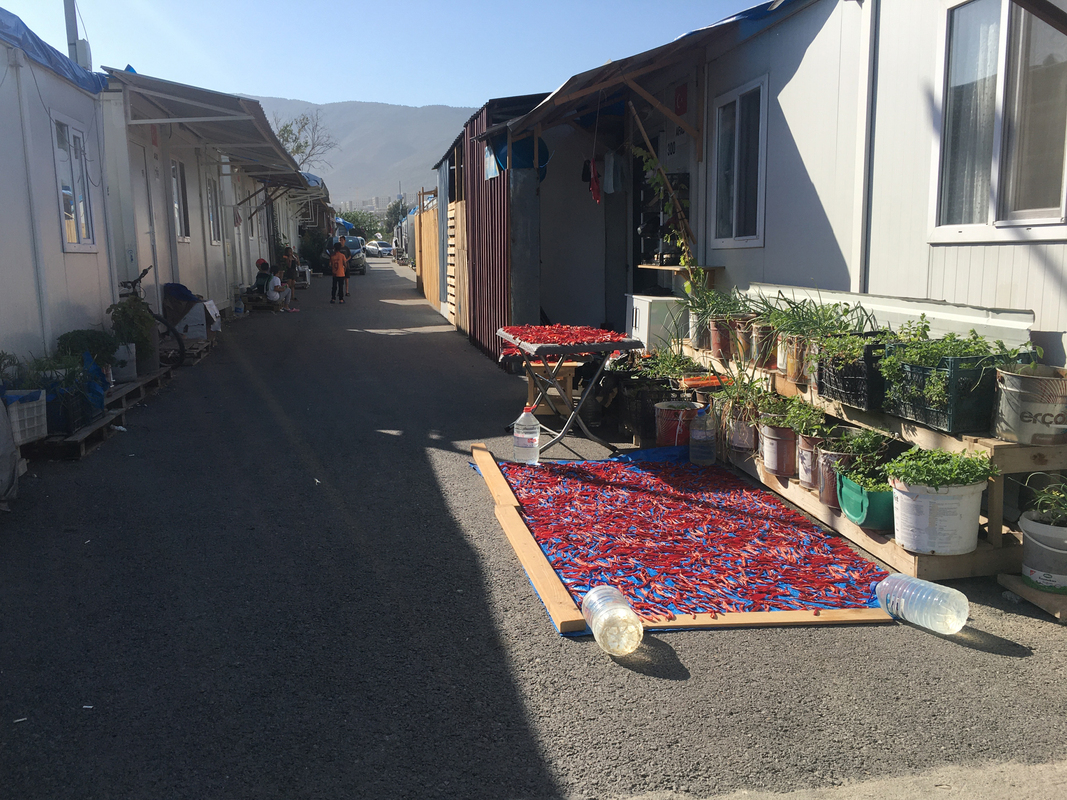
Figure 2. Büyükdalyan I container city in Spring 2025. (Credits: Francesco Pasta)
Home-making as repair can be read as resistance by residents to the systemic failures of disaster housing phases, which define their interim recovery as temporary “waiting”. This suggests that the process of inhabitation and home-making is essential to understanding the conditions of recovery, beyond the ownership of temporary or permanent housing. Thus, the overlooked value of such resident-led recovery in temporary housing needs to be recognised in disaster housing policies, without transferring responsibility for rebuilding onto residents.
Given limited post-disaster resources and time, participatory processes in reconstruction can be difficult to realise. However, it is possible to discuss with residents, NGOs, academics and practitioners how the roles of temporary and permanent housing, as well as budgetary allocation and spatial provision, can be reconsidered to let residents continue their home-making as repair without disruption, including during the transition to permanent housing.
Furthermore, if authorities support the adaptation of temporary housing to meet residents’ changing needs, temporary shelter units can become a transitional home thereby creating more time for participatory post-disaster planning and reducing the urgency for fast-paced mass delivery of housing units. Such dialogue could widen the debate on post-disaster reconstruction, helping to prevent material-centred reconstruction from proceeding without negotiation with a wider range of communities.
Architecture Sans Frontières UK and Sivil Düşler (2025) Living Heritage of Antakya’s Dom: Advocating for Adequate Housing in Reconstruction. Edited by F. Pasta, Ş. Can and B. De Carli. London: Architecture Sans Frontières UK. (Accessed: 29 October 2026).
This article draws on research conducted by Mahiro Sekizaki for the dissertation This article draws on research conducted by Mahiro Sekizaki for the dissertation Permanence in Temporary Housing: From governed waiting to social recovery in post-earthquake Türkiye. The research was supported by ASF-UK through the Dissertation Fellowship Programme at The Bartlett Development Planning Unit (DPU), University College London.