Leveraging Multilateral Institutions for Community Participation in Türkiye's Recovery
DPU/ASF-UK Fellow William Burnfield explores why multilateral institutions failed to challenge Türkiye's top-down approach to post-earthquake recovery
By William Burnfield
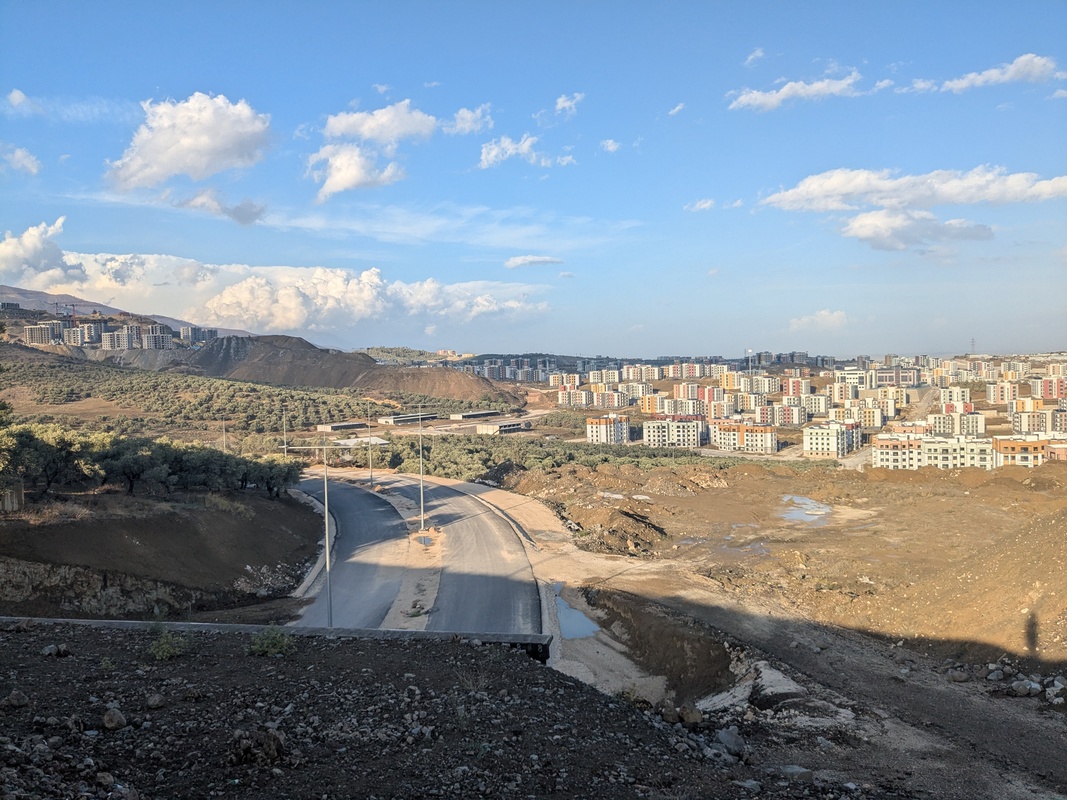
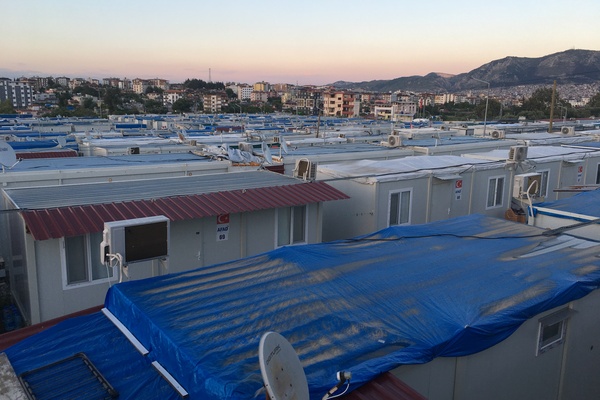
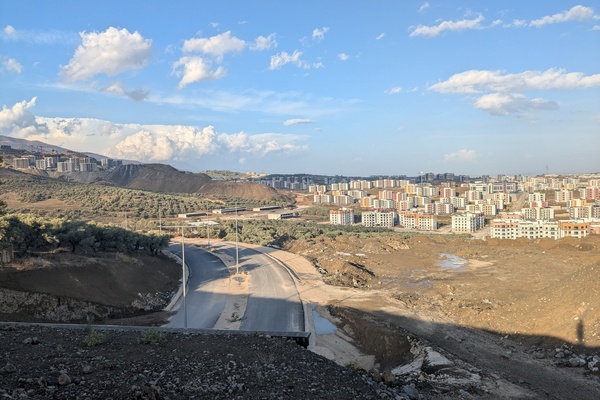
Post-earthquake mass housing in Dikmece, Antakya (Hatay). (Credits: Francesco Pasta)
Multilateral institutions possess powerful leverage to encourage participatory, community-based planning and implementation during post-earthquake recovery – through funding, loan conditions and the international legitimacy these institutions offer. Yet recent research conducted through an Architects Sans Frontieres – UK Fellowship indicates that multilateral institutions apply their leverage only sparingly. The research unpacks the multiple institutional factors contributing to this failure in 2023 post-earthquake recovery in Türkiye.
Much of the city centre of Samandağ, Türkiye remains in ruins three years after the February 2023 Kahramanmaraş earthquakes that devastated southeastern Türkiye and northern Syria. New blocks of non-descript apartment buildings now cover the hills surrounding the city, housing residents whose homes were destroyed by the earthquakes three years ago. An April 2026 Change by Design workshop in Samandağ’s Mağaracık neighbourhood engaged with Samandağ residents, activists, academics, the local professional Chamber of Architects, and municipal, provincial and neighbourhood-level government officials to understand the post-earthquake needs of the residents of this predominantly Arab Alawite community and their role in planning and recovery. In mid 2026, I conducted additional interviews with representatives of multilateral international organisations, local activists and residents to understand the intersecting factors contributing to the failure of multilateral institutions to apply meaningful leverage to encourage community-based planning during this post-earthquake recovery period. Supplemented by legislative research and my infrastructure policy and financing work for major international financial institutions over 20 years, my research probed the sharply differing understandings of post-earthquake recovery needs and desired outcomes between the community and the national government.
The earthquake recovery planning and construction led by the government and its TOKI construction arm offered only limited opportunities for participation by Samandağ residents and delivered largely the opposite of residents’ hopes for recognition of their needs, aspirations and ways of living. Although government representatives described community consultations as robust and extensive, residents experienced them as largely tokenistic. Lottery allocations of the new apartment block units scattered residents among unknown social applicants from outside Mağaracık, often far from other family members and neighbours. This demographic reshuffling contributed to community fears of cultural assimilation and loss of security. The government’s narrow framing of earthquake recovery needs as an urgent requirement to construct apartment block housing at scale reduced opportunities to engage with community residents and limited recovery outcomes largely to physical reconstruction.
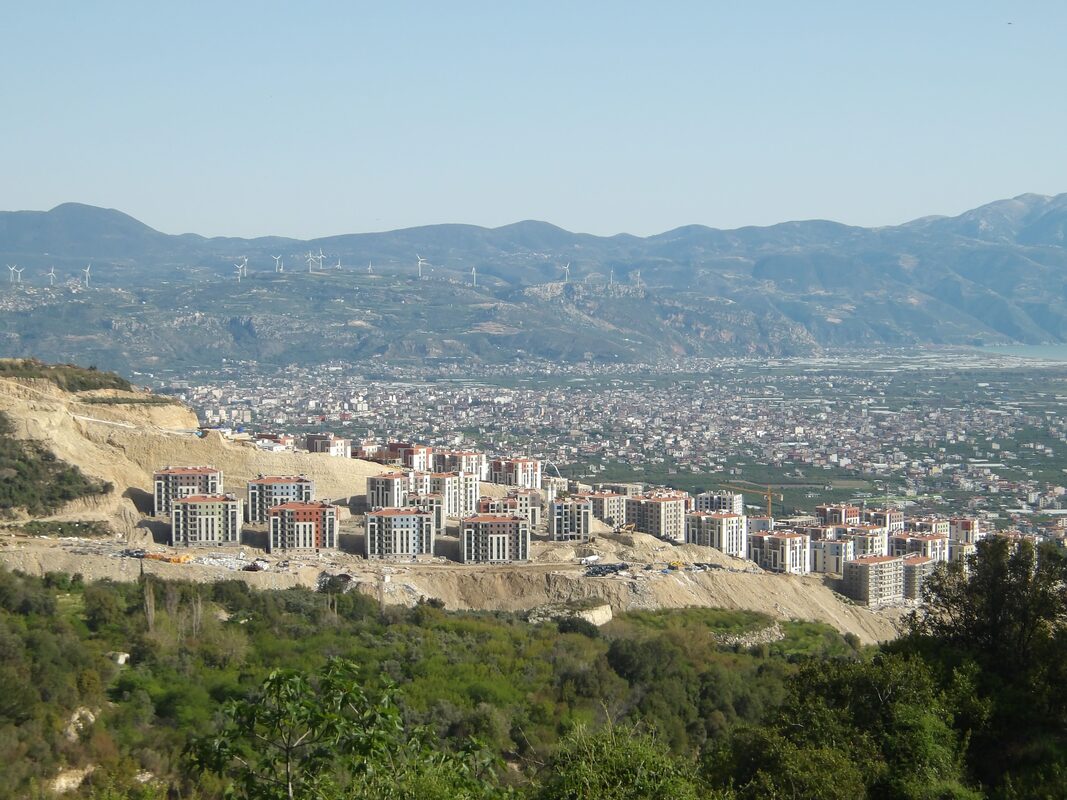
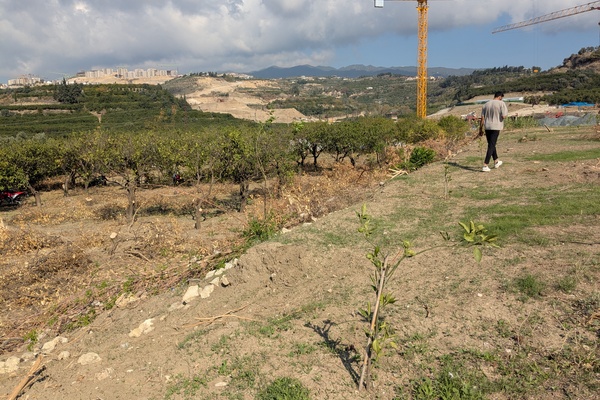
Standardised housing constructed by TOKI contractors on former orchards on the outskirts of Samandağ, April 2026. (Credits: Serra Utkum Ikiz)
International organisations hold extensive leverage to encourage local community participation in decision-making within the Turkish national government’s centralized approach to earthquake planning and recovery. International institutions active in financing Turkish earthquake risk reduction and recovery (including European Investment Bank, Asian Infrastructure Investment Bank, European Bank for Reconstruction and Development, the World Bank and others) provide the Turkish national government with substantial funding and international legitimacy. The formal policies of these lenders require community participation through requirements for extensive local consultations to shape project design and implementation, disclosure of how community participation is implemented, robust beneficiary grievance and reporting mechanisms and post-implementation monitoring of results. These policy obligations are typically formalized through project-specific loan conditions on borrowers such as the Turkish national government. The Turkish government itself committed to engage communities in post-earthquake recovery planning and implementation in its Türkiye Earthquakes Recovery and Reconstruction Assessment (TERRA) report (2023) and the non-binding Sendai Framework, to which Türkiye is a signatory.
Yet the Fellowship research provides evidence that the international leverage held by multilateral institutions was applied in only limited ways in Türkiye, often impacting only the margins of earthquake recovery projects. These institutions’ actions narrowed, and appeared to reinforce rather than constrain, the government’s “top-down” approach to recovery. The government’s technical framing of community earthquake recovery needs as urgent housing construction aligned closely with the project scheduling and monitoring objectives of international financial institutions, which competed aggressively for the opportunity to lend to Türkiye. Both relied on quantifiable indicators to meet rapid institutionally-driven project schedules. Reliance on government self-verification (instead of independent third-party verification) of agreed post-earthquake housing project monitoring indicators and loan conditions diluted the impact of bank loan conditions by offering the government latitude in certifying its compliance. Politically problematic issues, such as construction of housing by TOKI contractors on land expropriated at below-market prices (where bank participation could make the most difference), are simply avoided through narrow project structuring.
Other international multilateral institutions, including UNESCO and the municipal network of UCLG, work at international levels to encourage local community participation through research, conferences and capacity-building. However, their internationally-focused mandates, limited resources and need to reframe complex political issues as technical issues in order to build consensus-driven solutions can limit their ability to assist local communities.
Whether future Turkish earthquake recovery planning benefits from effective community engagement does not require new lending policies by international institutions. Rather, it may simply require that international institutions fully apply the leverage they already hold through their institutional procurement policies and lending conditions. Project lending agreements should incorporate qualitative in addition to quantitative project measures, verifying how (not just how many) residents’ grievances are resolved, measuring whether consultations offer real opportunities for community involvement in planning and decision-making (not just the number of consultation meetings held), and measuring whether housing provided is affordable and allocated to maintain neighbourhood clusters. Multilateral institutions could instead fund the construction of rental housing, larger subsidies and low-interest mortgages to support in-place house rebuilding.
This article draws on research conducted by William Burnfield for the dissertation Leveraging Co-Production in Post-Disaster Recovery in Semi-Authoritarian States: A Case Study of Samandağ. The research was supported by ASF-UK through the Dissertation Fellowship Programme at The Bartlett Development Planning Unit (DPU), University College London.