The Indigenous Village that Planned its own Power Grid
DPU/ASF-UK Fellow Dewy Sacayan explores how an Indigenous community in the Philippines planned and built its own renewable energy system.

By Dewy Sacayan
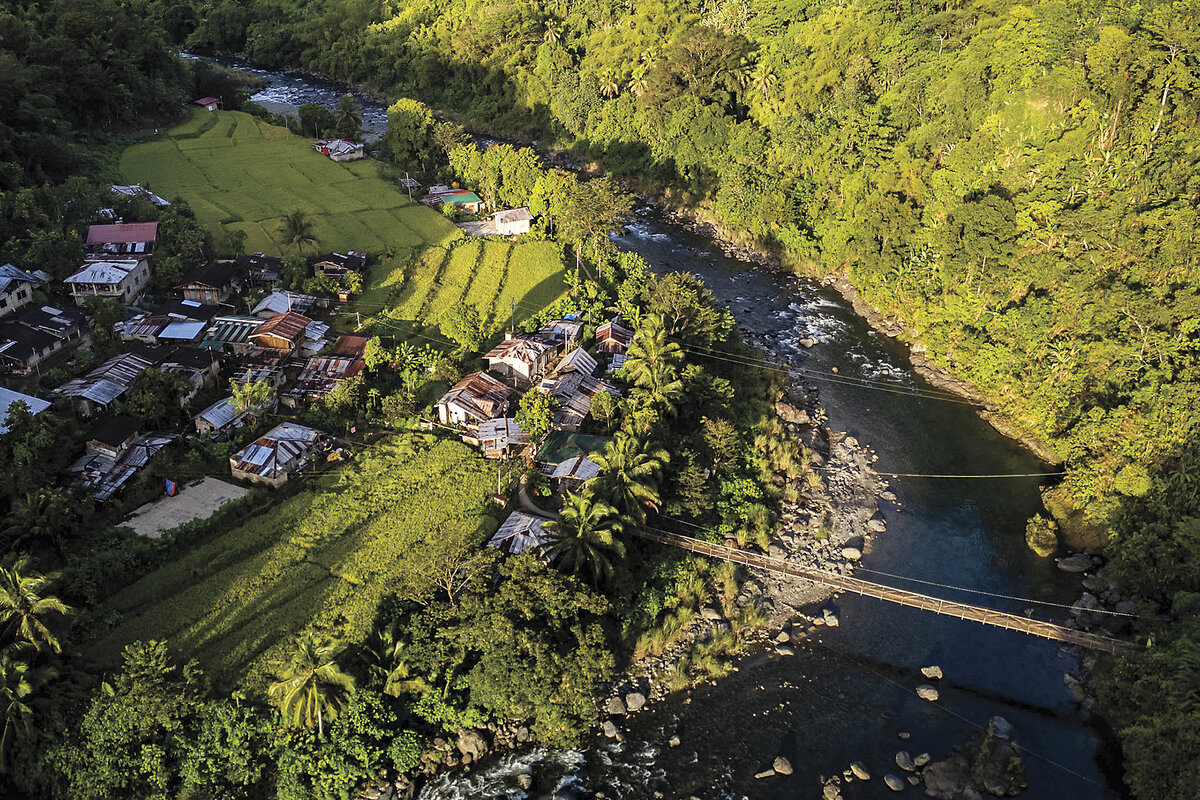
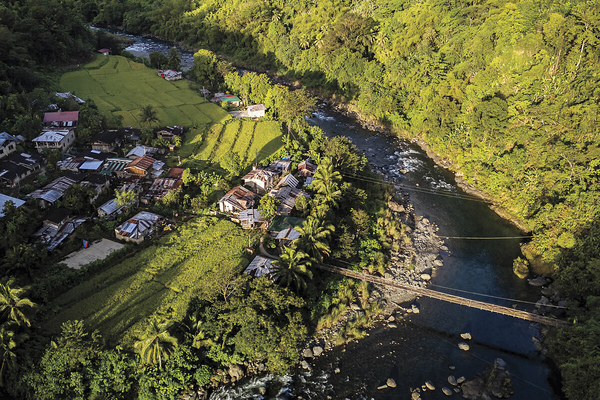
Residents of Sitio Lapat powered by renewable generated from their local microhydro power plants. (Credits: The Christian Science Monitor, "In remote northern Philippines, a local solution to the global energy shock")
Before 2025, the community health worker in Sitio Lapat, a sub-urban cluster of houses, had a routine that had nothing to do with medicine. Whenever she needed to run a nebuliser for a patient, she'd first ask up to ten neighbouring households to switch off their appliances. Otherwise, there would not be enough power to go around. Sitio Lapat, a remote settlement of the Isneg people in the Philippine Cordillera, was sharing a strained micro-hydro system with two other sitios serving 125 households. No mobile signal reached the area either.
Today, Sitio Lapat runs its own 20-kilowatt hydro system, built and governed by the community itself. It powers 70 households, a school, a health centre, and a rice mill. Nobody outside the village decides when the power goes on or off. "We decide when to switch it on and off," says Rodolfo Sagban, chairman of the community's own hydro association. This plain sentence describes self-determination of Indigenous people, something planning departments often fail to recognise and plan for.
What makes this story worth telling isn't just that a small village got electricity. It's how locals took matters to their own hands and did it. Before securing any funding, the community approached a technical partner, Sibol ng Agham at Teknolohiya (SIBAT), and asked to be shown how to start. Then, through community labour, they started the project themselves. They hauled the turbine, dug the canal, and their elders negotiated the terms themselves: in exchange for the hydro system, they committed to protecting over 1,200 acres of forest and watershed. That commitment wasn't a compliance checkbox imposed by a funder. It was an extension of lapat, a governance system Isneg and Tingguian communities have used for generations to declare parts of the forest off-limits so they can regenerate, and is enforced by elected elders through monitoring, ritual, and fines.
In other words, the "planning" in this energy project (the feasibility work, the land-use decisions, the rules for who gets access and on what terms) was never handed down from a planning ministry. It came from a traditional institution that has managed these watersheds for generations – an indigenous commons governance. This is one of the clearest examples of community-led energy planning working exactly as advertised: not a village consulted about someone else's plan, but a village that is the planning authority.
This matters because the alternative has a long, ugly history in this region. In the 1970s, the Philippine government responded to a global oil shock by pushing the Chico River Basin megadam project onto Cordillera ancestral land. Indigenous resistance eventually stopped the dam and pulled the World Bank funding backing the project, but only after the assassination of Kalinga elder Macli-ing Dulag.
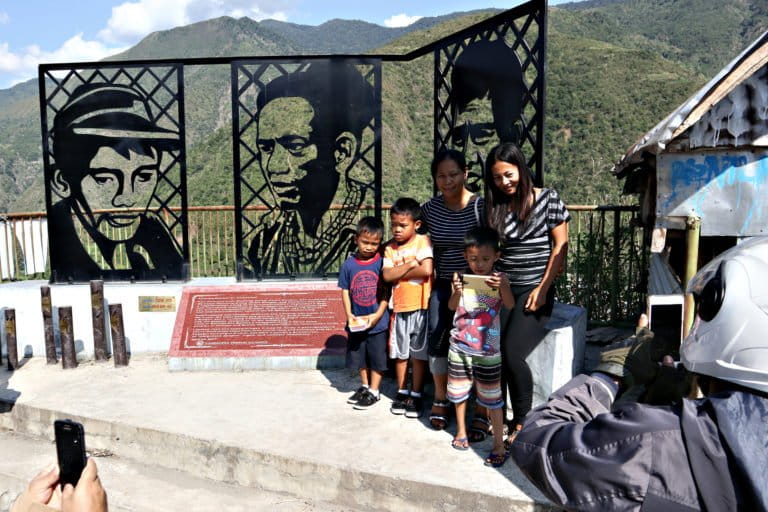
Locals pose to commemorate indigenous leaders including Macli-ing Dulag who was assassinated during the Chico River Dam protests. The Heroes’ Monument in Tinglayan, Kalinga was dismantled in 2021. (Credits: Mongabay, "The river will bleed red: Indigenous Filipinos face down dam projects")
Fifty years later, the justification has changed from “development” to “decarbonisation,” but the underlying move is familiar: a national energy emergency creates urgency, and ancestral land becomes the site where that urgency gets resolved, with consent processes managed or bypassed.
Sitio Lapat, and a similar micro-hydro project in nearby Sitio Buneg that has run continuously since 2002, suggest there is a third option between big development infrastructure imposed on indigenous land and no infrastructure at all. When indigenous institutions are treated as the planning authority rather than a stakeholder to be consulted, communities can build, finance, and sustain their own renewable energy. They can also tie it to conservation commitments because the watershed isn't an asset to them, it's their home.
There's a catch worth naming through this process: none of this happened because a government planning document recognised lapat. It didn't, and largely still doesn't because planning documents such as regional development plans are silent as to indigenous commons governance systems. What eventually gave the system some protection wasn't domestic planning law. Instead, it was UNESCO, which cited lapat directly when it designated Apayao province a biodiversity reserve in 2026. The village's own governance worked fine without official recognition. However, what recognition bought was security against extractivism and future foreign-financed dams already approved elsewhere in the Cordillera.
The lesson for energy and community-led planning elsewhere is not complicated, even if it's rarely acted on: communities that have governed their land for generations do not need to be taught how to plan. They need planning systems and financiers willing to build around what's already there, with the people at the helm of decision making.
This article draws on research conducted by Dewy Sacayan for the dissertation Decarbonising Without Dispossession of Ancestral Lands: Lessons from Lapat Governed Micro-Hydro Power in the Philippine Cordillera. The research was supported by ASF-UK through the Dissertation Fellowship Programme at The Bartlett Development Planning Unit (DPU), University College London.